SAP S/4HANA
-
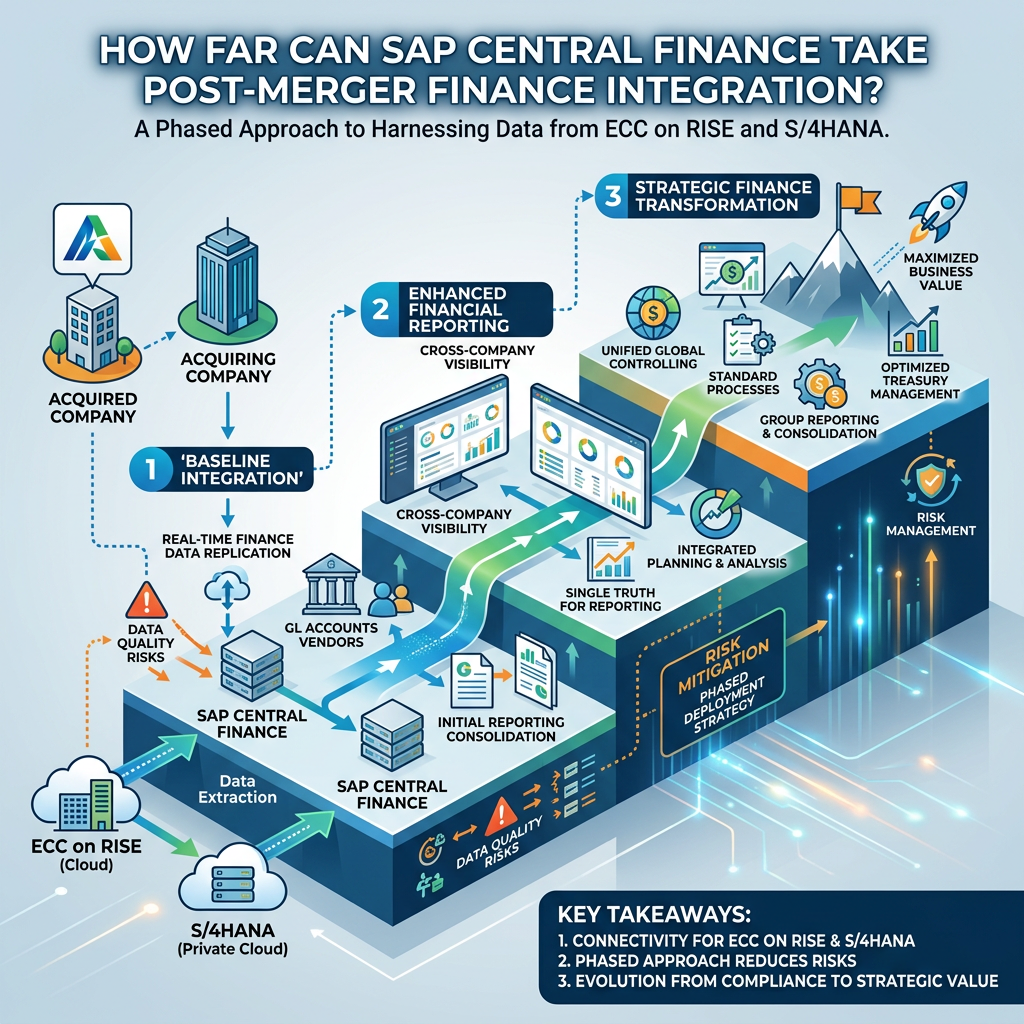
SAP Central Finance for Post-Merger ERP Integration: Assessing ECC on RISE and S/4HANA Sources
After a merger, how much financial integration can SAP Central Finance really deliver? Using a parent company on SAP S/4HANA Cloud Private Edition and two acquired entities, one on ECC on RISE and one on S/4HANA using FI only, we… Continue reading
-
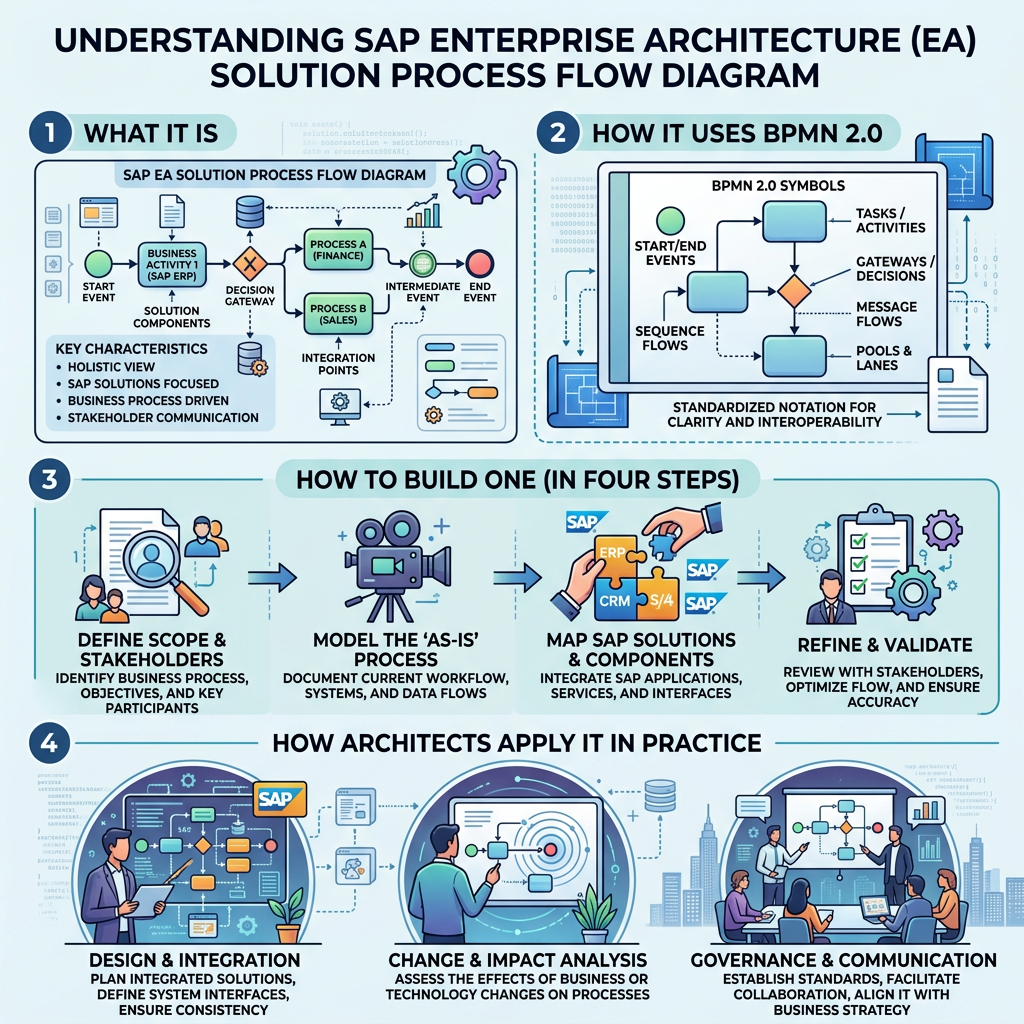
Solution Process Flow Diagram: How SAP EA Connects Process, Systems, and Integration in One View
Which system performs each process step, in what order, and how do the systems integrate? This guide explains the SAP EA Framework’s Solution Process Flow Diagram: its definition, building steps, and official examples. Continue reading
-
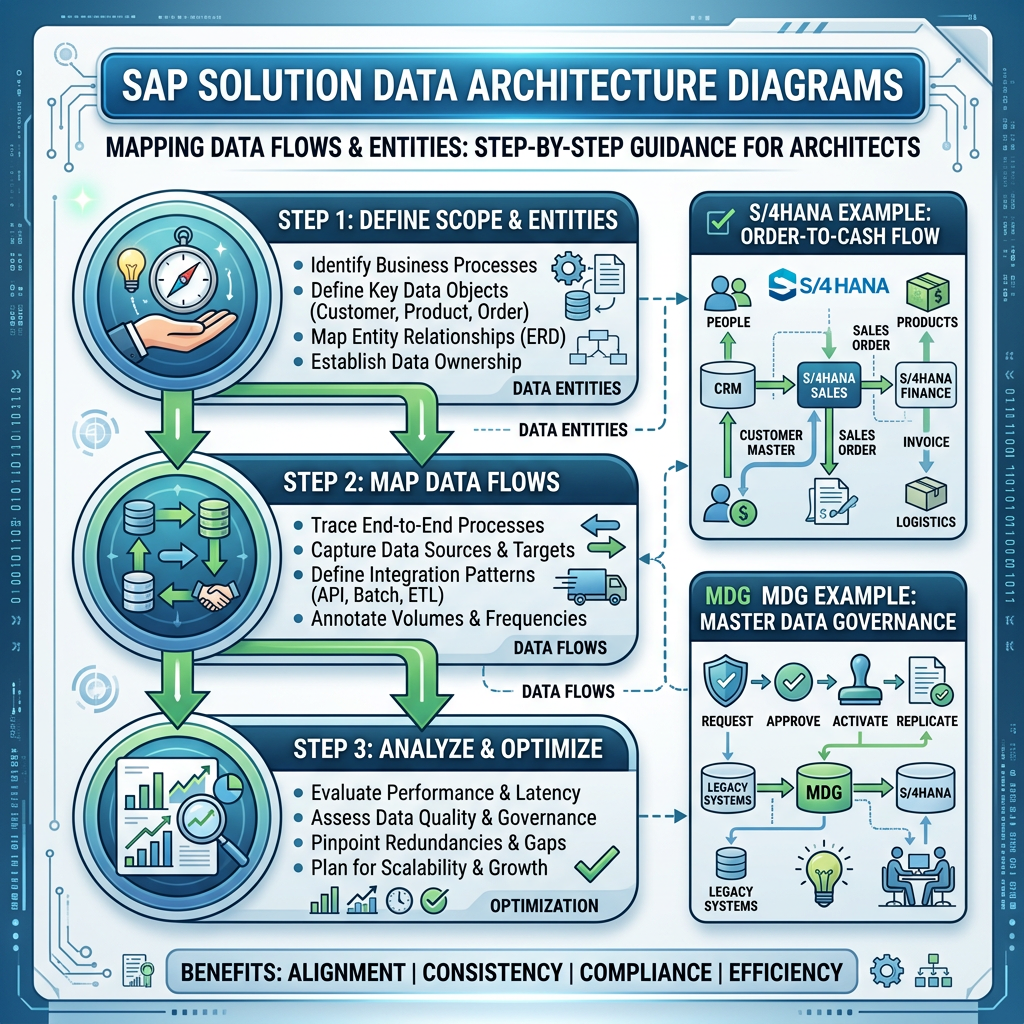
What Are Solution Data Architecture Diagrams?
Solution Data Architecture Diagrams in the SAP EA Framework combine two artifacts: the Solution Data Flow Diagram and the Conceptual Data Diagram. This guide explains their purpose, building blocks, and three-step creation process, with official SAP examples (Travel to Reimburse,… Continue reading
-
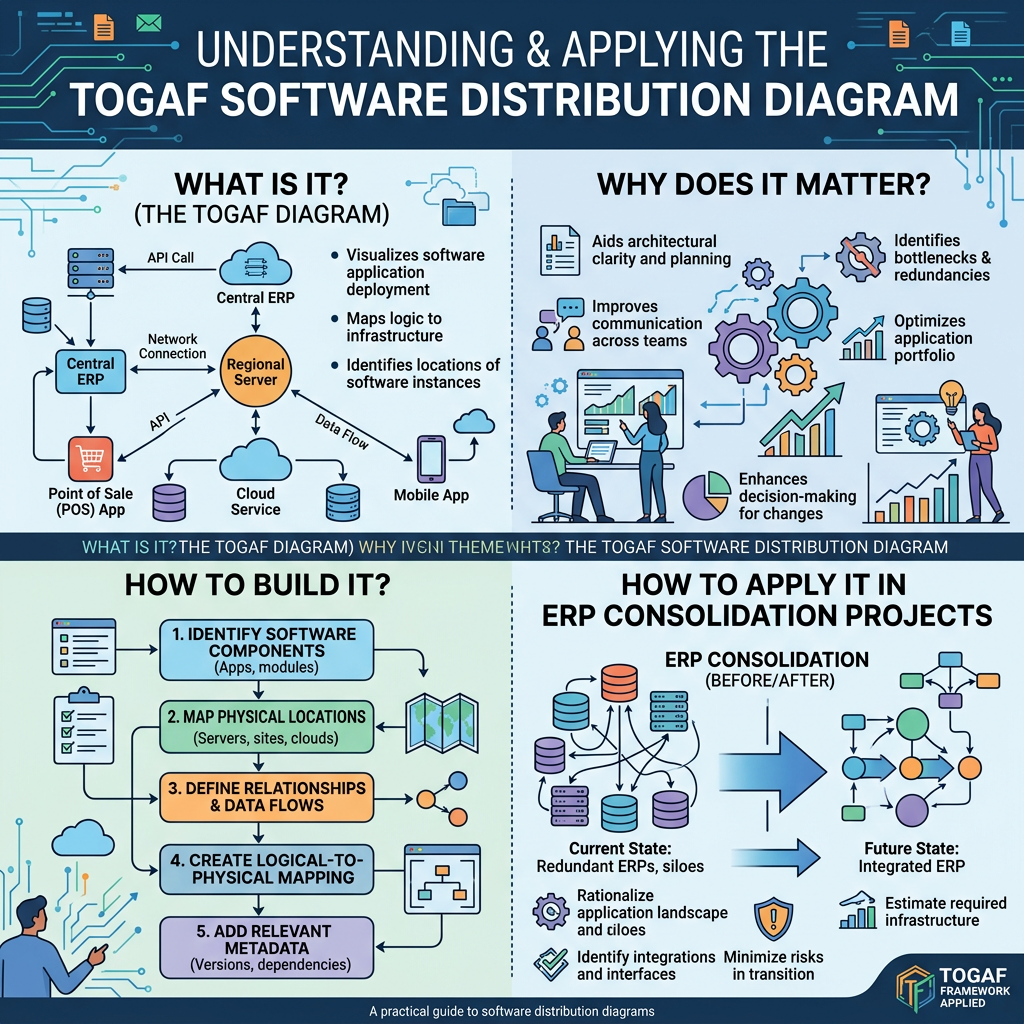
TOGAF® Software Distribution Diagram Explained: Purpose, Value, and Real-World Use Cases for Enterprise Architects
The TOGAF Software Distribution Diagram shows which physical technology each application runs on and where. Explore its purpose, value, a five-step build approach, and an automotive Tier 1 ERP consolidation use case. Continue reading
-
Solution Context vs Solution Concept: A Practical Guide for Enterprise Architects
Solution Context defines the environment and boundaries of a solution, while Solution Concept outlines how the future solution will address them. This practical guide explains their roles, differences, creation steps, and application in an SAP supply chain transformation. Continue reading

-
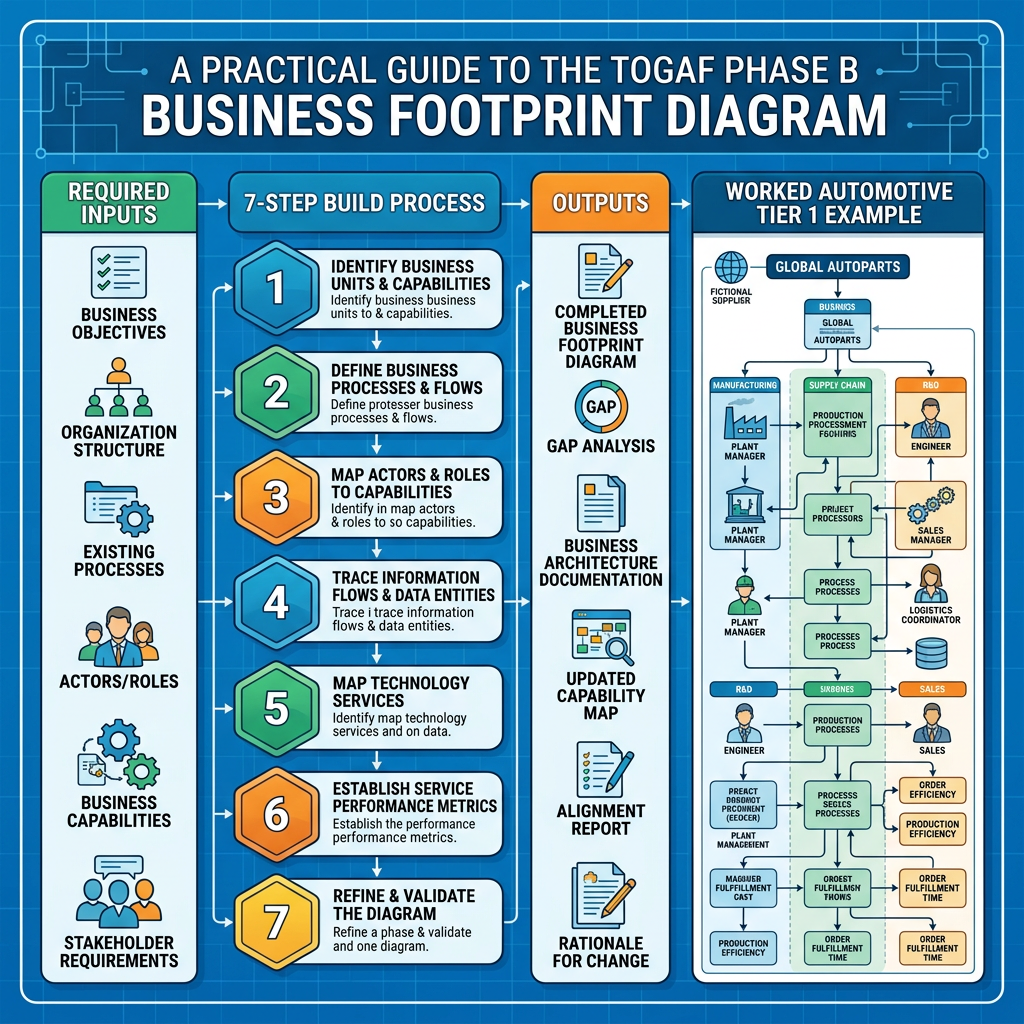
Business Footprint Diagram: A Practical TOGAF® Guide with INPUT, PROCESS, and OUTPUT for Enterprise Architects
Of all the artifacts in TOGAF ADM Phase B, the Business Footprint Diagram is the one that lands hardest with executives — and the one most often drawn carelessly. This guide breaks it down into the prerequisites you must gather… Continue reading
-
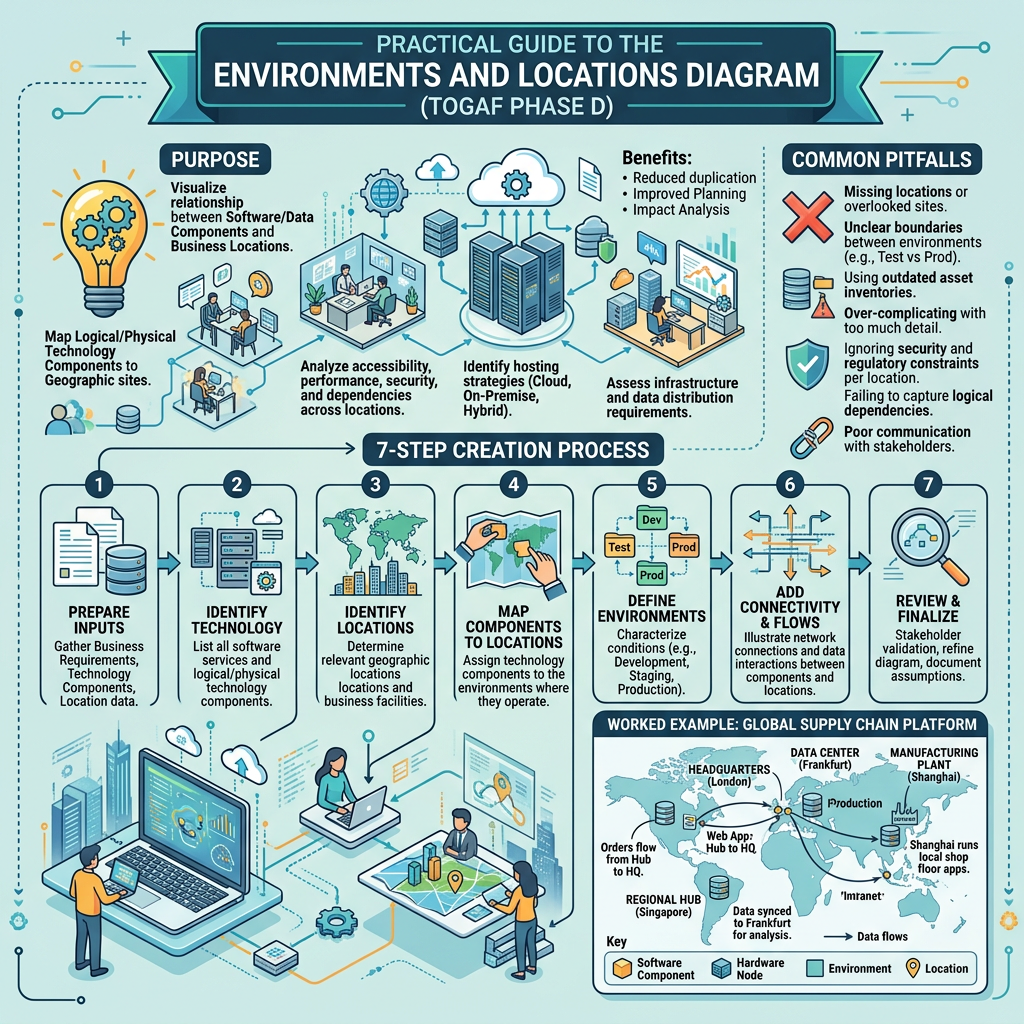
Environments and Locations Diagram: A Practical TOGAF® Phase D Guide for Enterprise Architects
The Environments and Locations Diagram is a formal TOGAF Phase D artifact that answers which locations host which applications, what technologies run where, and where users connect from. This guide covers its purpose, a seven-step creation process, seven practical pitfalls,… Continue reading
-
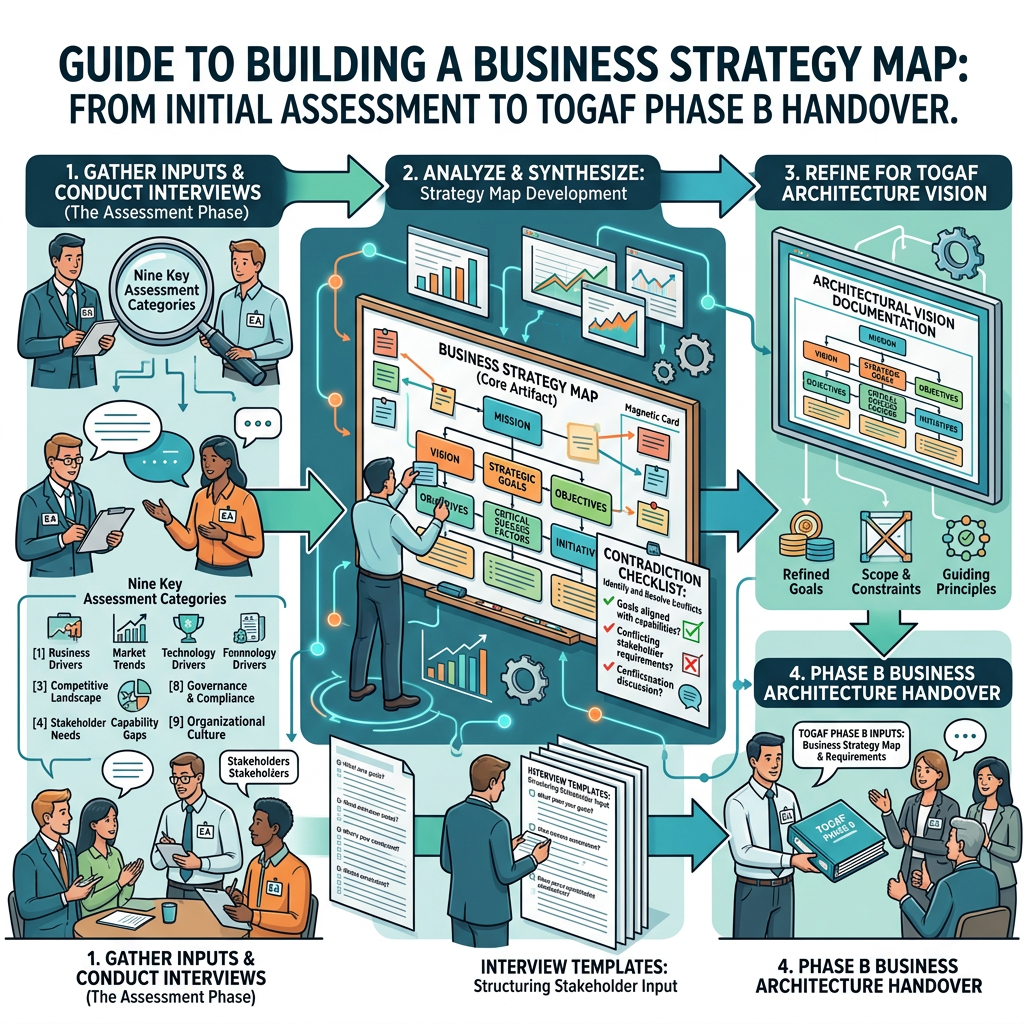
Business Strategy Map for Enterprise Architecture: How to Translate Strategy in TOGAF® Architecture Vision
The most common failure in early Enterprise Architecture work is misreading the business strategy. This guide explains where the Business Strategy Map sits in TOGAF Phase A, a five-step build process, the nine categories to probe during a Business Strategy… Continue reading
-
SAP Central Finance for Manufacturing M&A: A Finance-First Integration Roadmap for CIOs
Manufacturing integration must balance the rapid harmonization of management reporting with the safe migration of plant operations. This article explains how SAP Central Finance supports a finance-first integration roadmap, with real-world cases, CIO decision criteria, implementation risks, and value KPIs. Continue reading

-
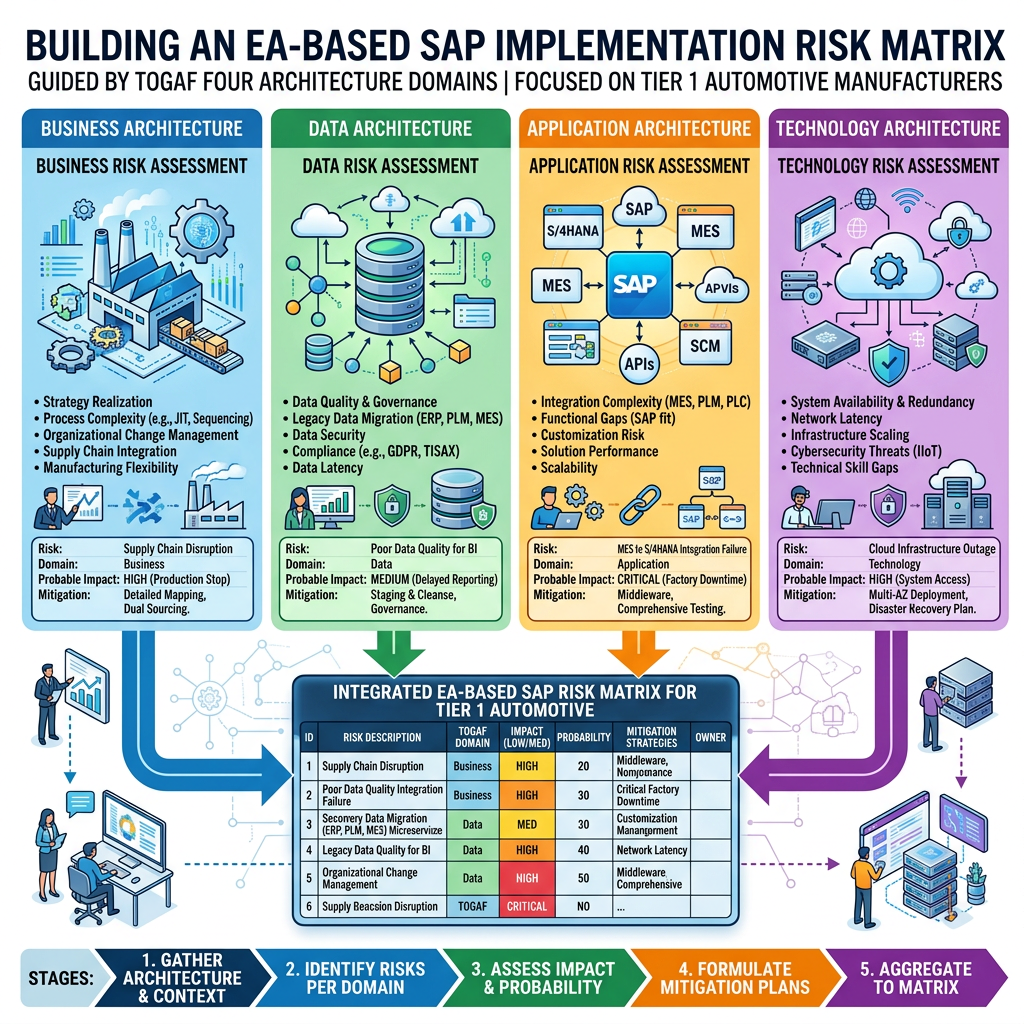
Mastering Risk Analysis for SAP Implementation in Tier 1 Automotive Manufacturing: A TOGAF-Based Approach
A TOGAF-based framework for identifying, evaluating, and mitigating SAP implementation risks in Tier 1 automotive manufacturing — from BOM errors and MRP failures to EDI disruptions and OEM delivery delays. Continue reading