TOGAF
-
TOGAF Architecture Repository Explained: 8 Components, a Real-World Example, and AI Prompts
Many Architecture Repositories get built, then quietly abandoned. This article explains the eight components defined in the TOGAF Standard, 10th Edition, through the example of an automotive supplier consolidating its global ERP on SAP S/4HANA. It also shows how to… Continue reading

-
AI for Enterprise Architecture: Phase-by-Phase TOGAF ADM Prompts to Deliver EA in Weeks, Not Months
A practical guide to accelerating EA with generative AI: core principles, a 12-week TOGAF ADM plan, ready-to-use prompts for every phase, and how to manage the risks. Continue reading

-
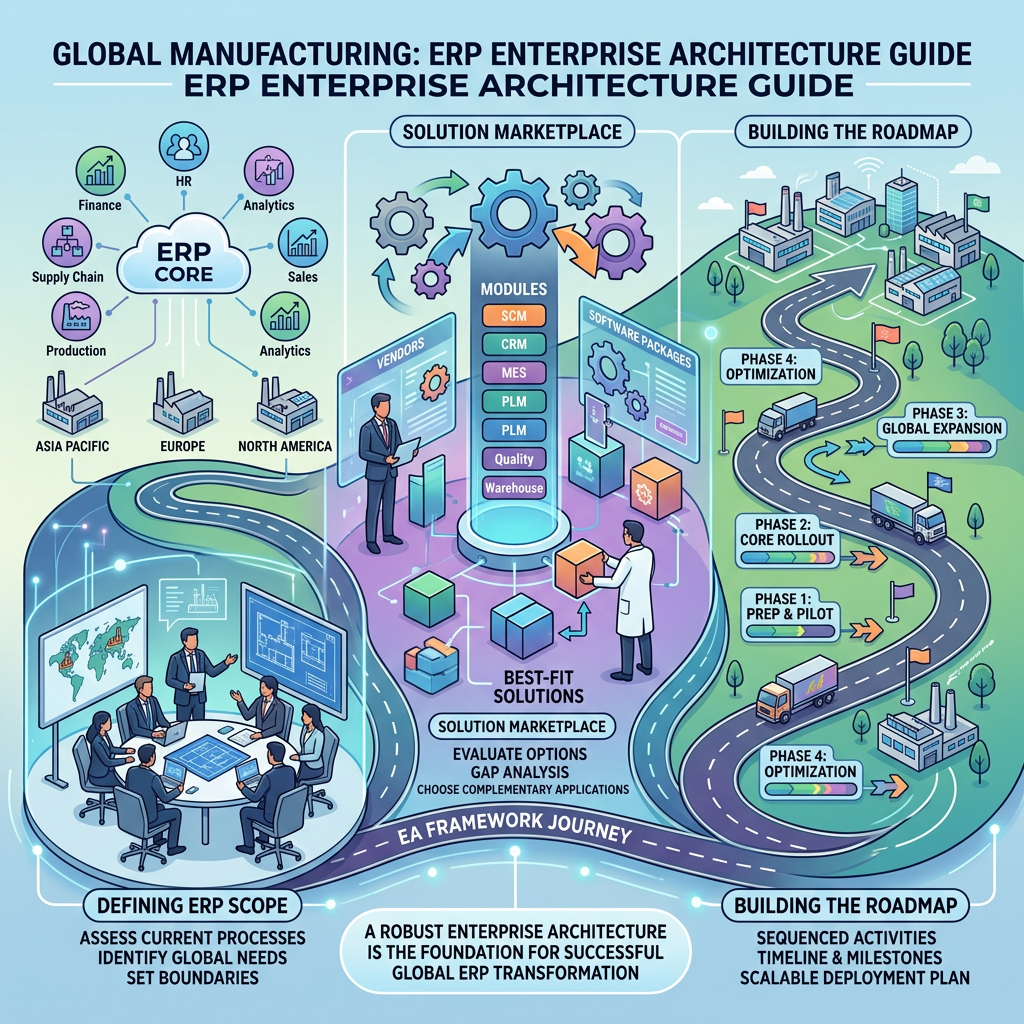
ERP Enterprise Architecture: How to Optimize ERP Scope, Solution Selection, and Implementation Strategy in Global Manufacturing
ERP implementation in global manufacturing requires critical decisions about ERP scope, surrounding applications, global standardization, and deployment strategy. This article explains how Enterprise Architecture helps CIOs and ERP program managers make informed decisions using Business Capability Maps, Solution Scope Matrices,… Continue reading
-
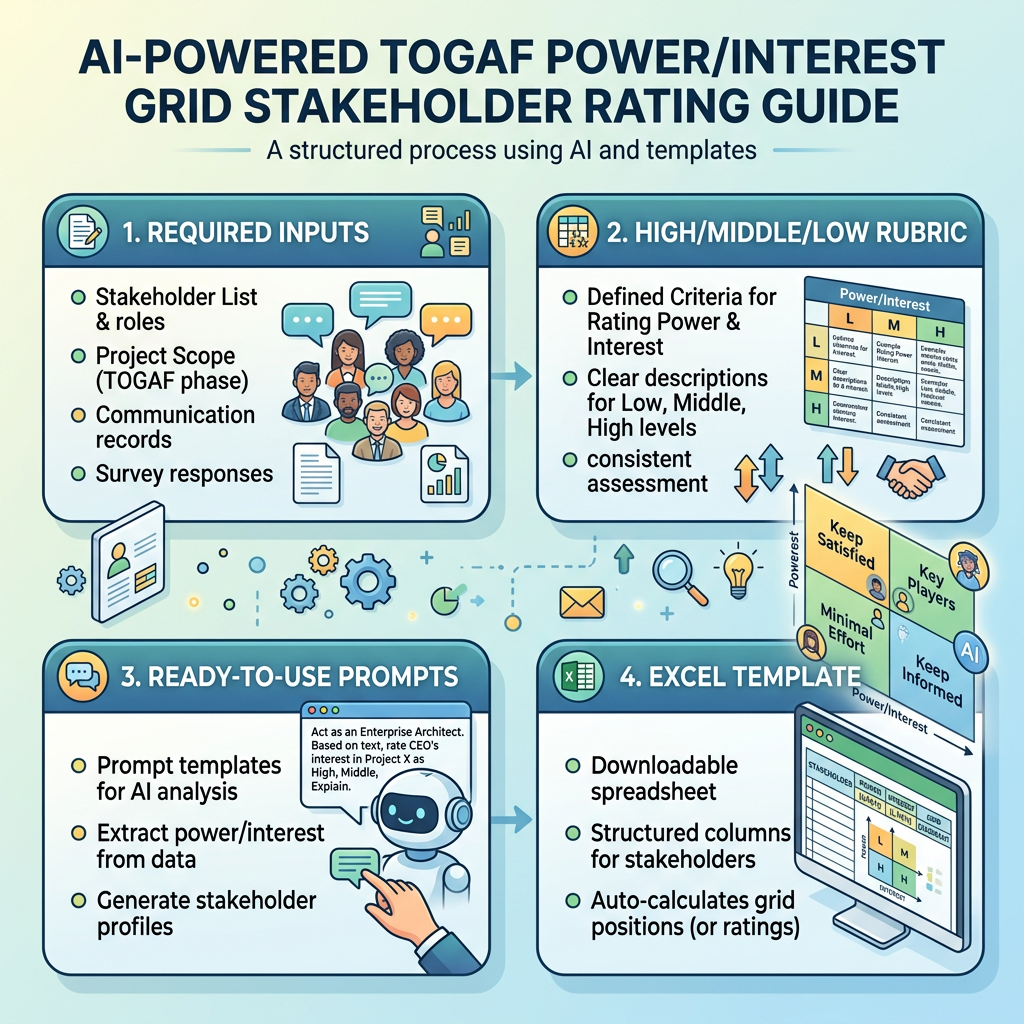
TOGAF® Power Interest Grid with AI: Inputs, Rubric, Prompts, and an Excel Template
What does AI need to rate stakeholder power and interest as High, Middle, or Low in TOGAF? This guide covers units of assessment, required inputs, a scoring rubric, ready-to-use prompts, and an Excel Concern Register that tracks AI and human… Continue reading
-
TOGAF® Stakeholder Management with AI: A 6-Step Guide to Mapping Concerns and Interests
How can AI streamline TOGAF stakeholder management? This guide outlines a practical six-step process, from extracting concerns and interests to Power/Interest classification and viewpoint mapping, with a sample prompt, a Concern Register template, governance guardrails, and an automotive Tier 1… Continue reading

-
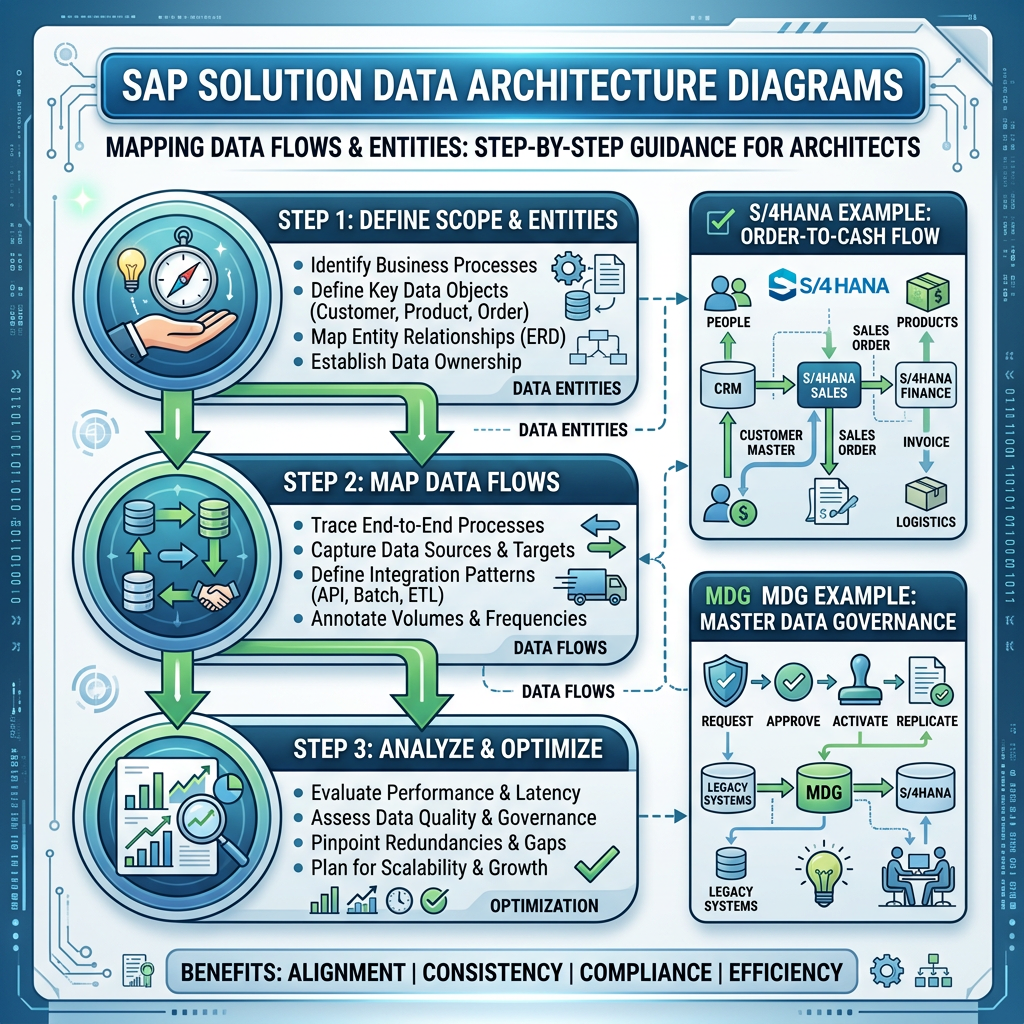
What Are Solution Data Architecture Diagrams?
Solution Data Architecture Diagrams in the SAP EA Framework combine two artifacts: the Solution Data Flow Diagram and the Conceptual Data Diagram. This guide explains their purpose, building blocks, and three-step creation process, with official SAP examples (Travel to Reimburse,… Continue reading
-
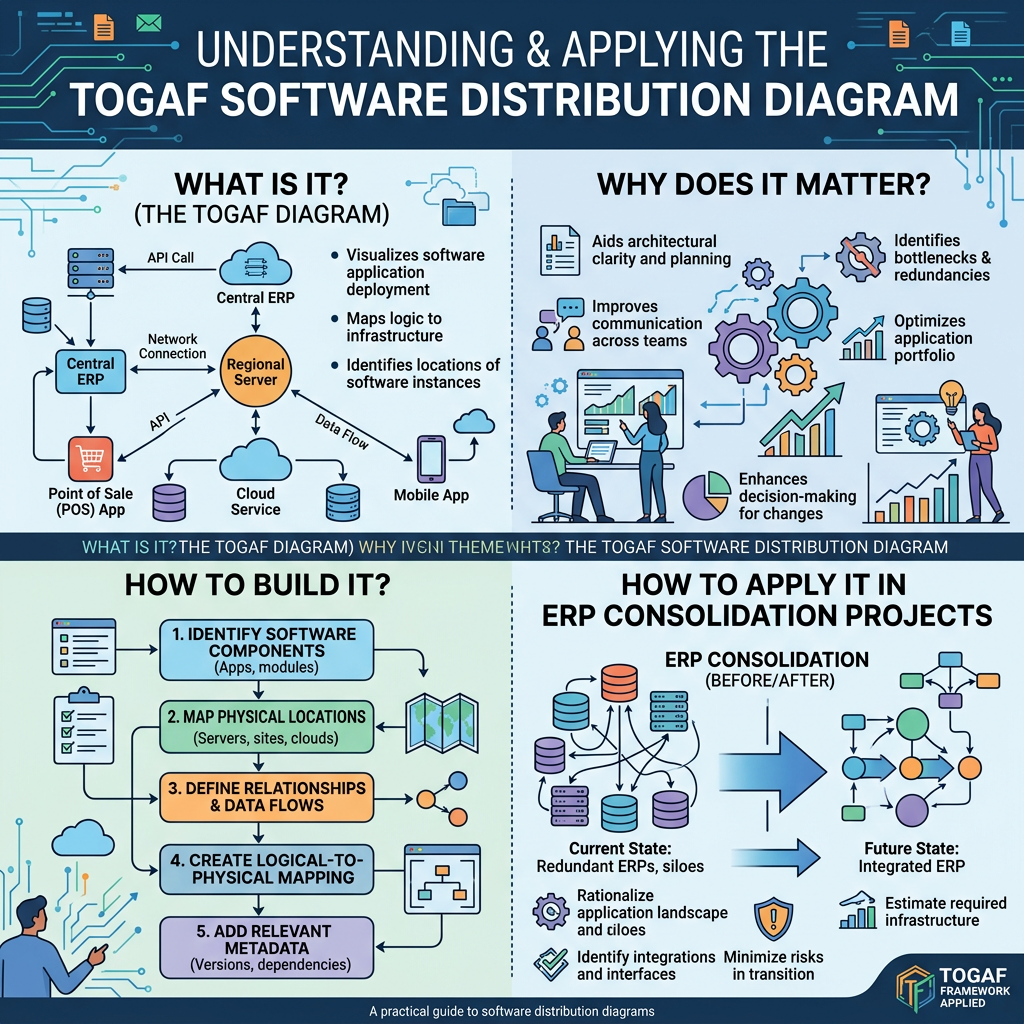
TOGAF® Software Distribution Diagram Explained: Purpose, Value, and Real-World Use Cases for Enterprise Architects
The TOGAF Software Distribution Diagram shows which physical technology each application runs on and where. Explore its purpose, value, a five-step build approach, and an automotive Tier 1 ERP consolidation use case. Continue reading
-
Solution Context vs Solution Concept: A Practical Guide for Enterprise Architects
Solution Context defines the environment and boundaries of a solution, while Solution Concept outlines how the future solution will address them. This practical guide explains their roles, differences, creation steps, and application in an SAP supply chain transformation. Continue reading

-
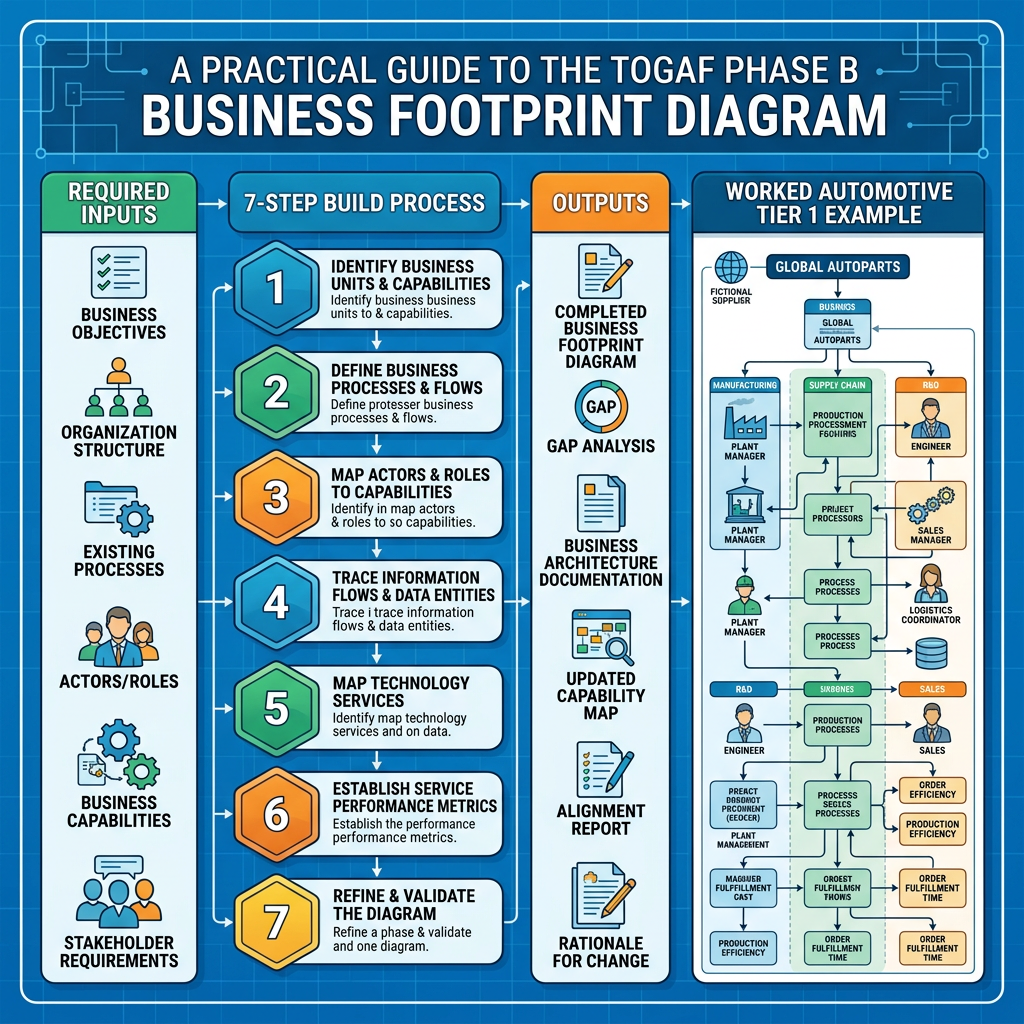
Business Footprint Diagram: A Practical TOGAF® Guide with INPUT, PROCESS, and OUTPUT for Enterprise Architects
Of all the artifacts in TOGAF ADM Phase B, the Business Footprint Diagram is the one that lands hardest with executives — and the one most often drawn carelessly. This guide breaks it down into the prerequisites you must gather… Continue reading
-
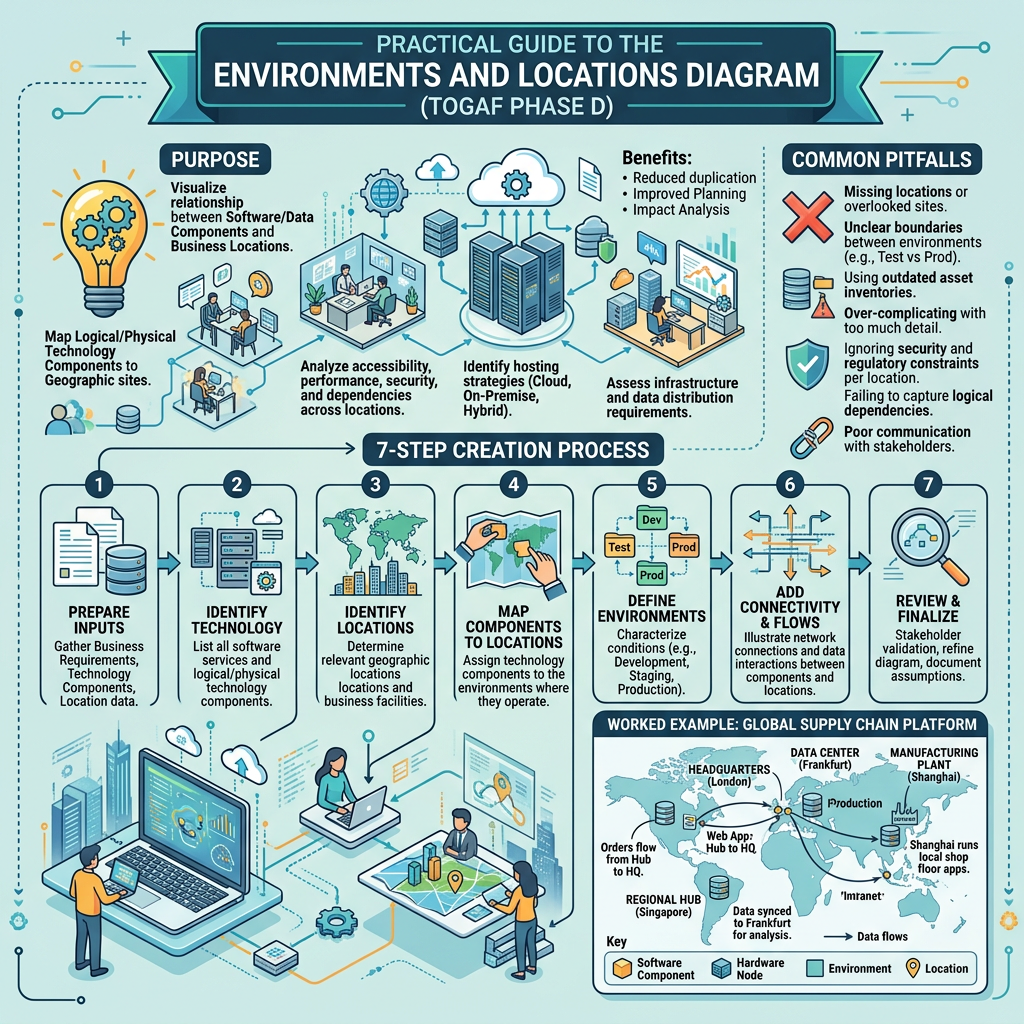
Environments and Locations Diagram: A Practical TOGAF® Phase D Guide for Enterprise Architects
The Environments and Locations Diagram is a formal TOGAF Phase D artifact that answers which locations host which applications, what technologies run where, and where users connect from. This guide covers its purpose, a seven-step creation process, seven practical pitfalls,… Continue reading