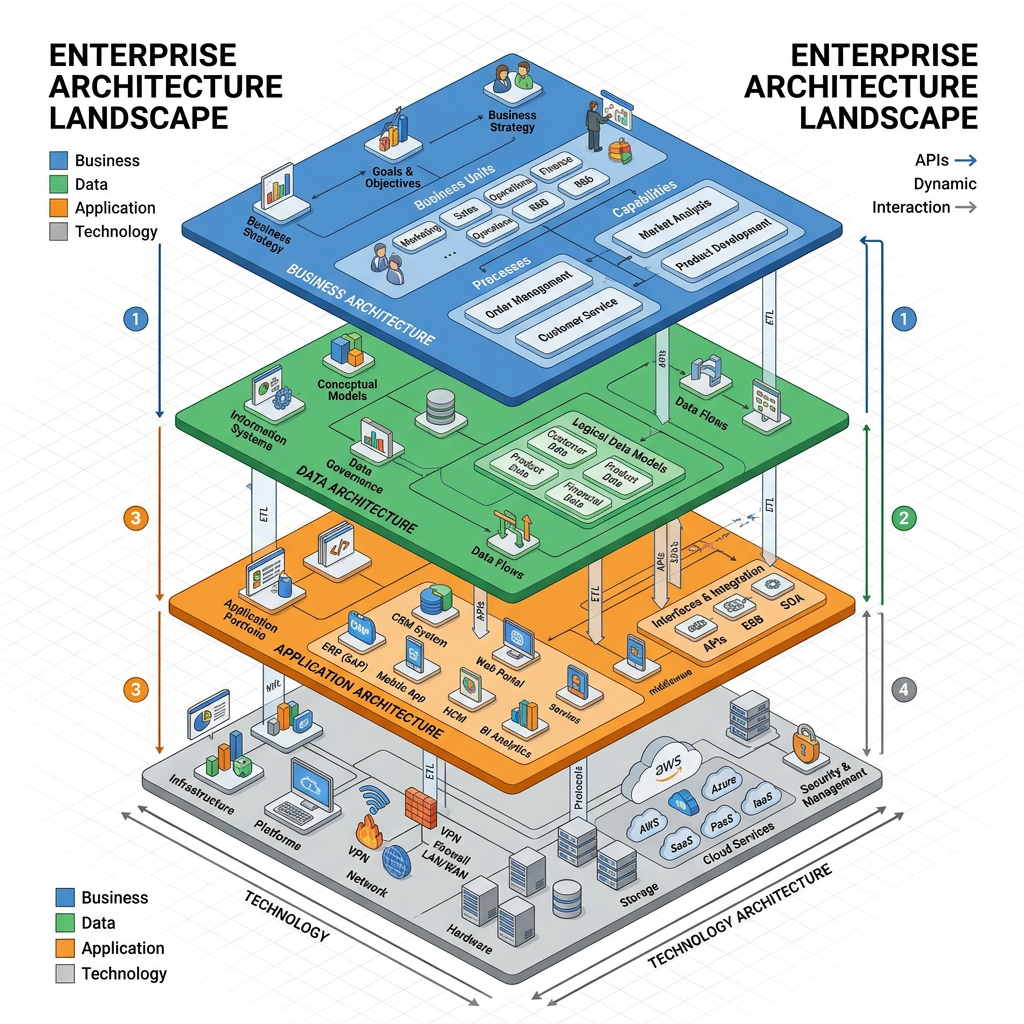
clean core
-
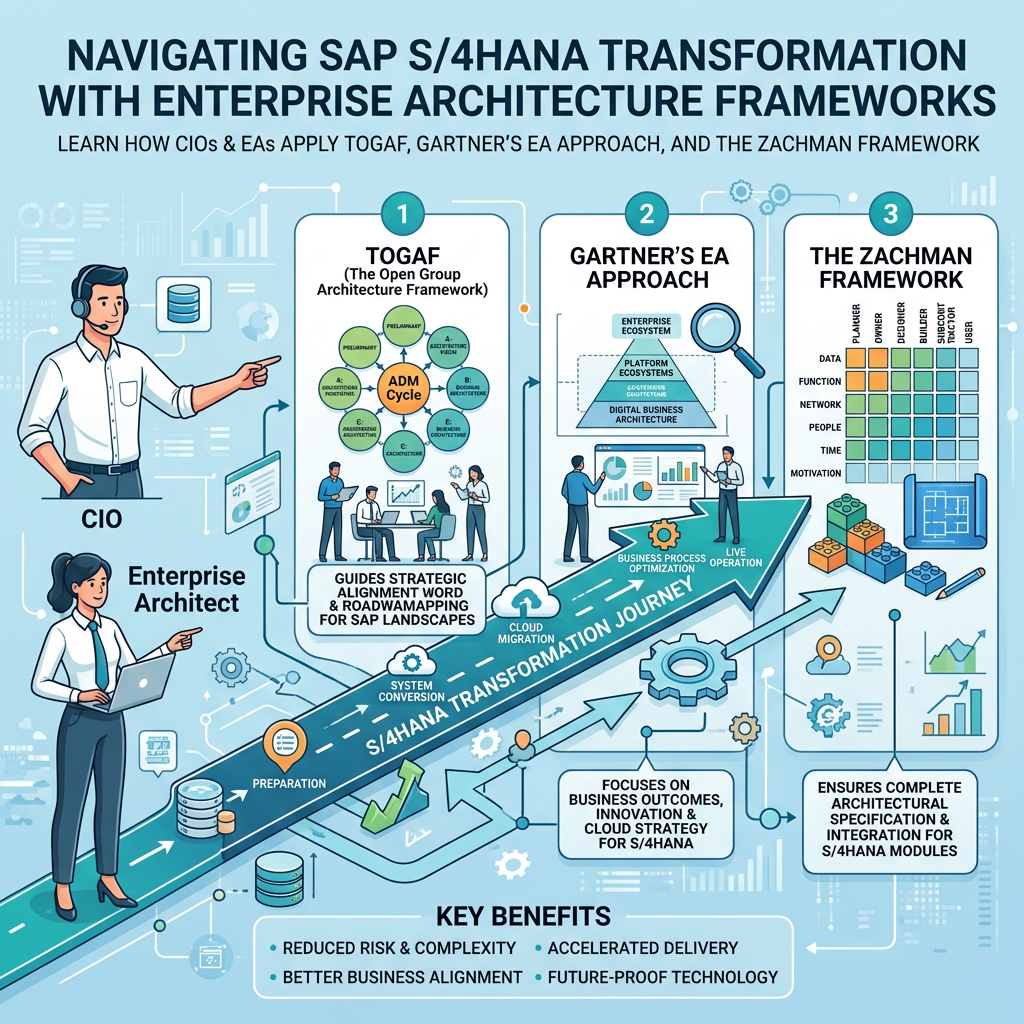
Choosing an Enterprise Architecture Framework for SAP Transformation: A Practical Guide to TOGAF®, Gartner, and Zachman
Successful SAP S/4HANA transformation requires more than an implementation methodology. This practical guide explains how CIOs and enterprise architects can combine TOGAF, Gartner’s EA approach, the Zachman Framework, and SAP Activate. Continue reading
-
How to Use TOGAF® Architecture Principles in Global SAP Implementation and Rollout Projects
Learn how TOGAF Architecture Principles can be applied to global SAP implementation and rollout programs. This practical guide explains the Name, Statement, Rationale, and Implications template and shows how PMs and Enterprise Architects can use principles for global standardization, Clean… Continue reading

-
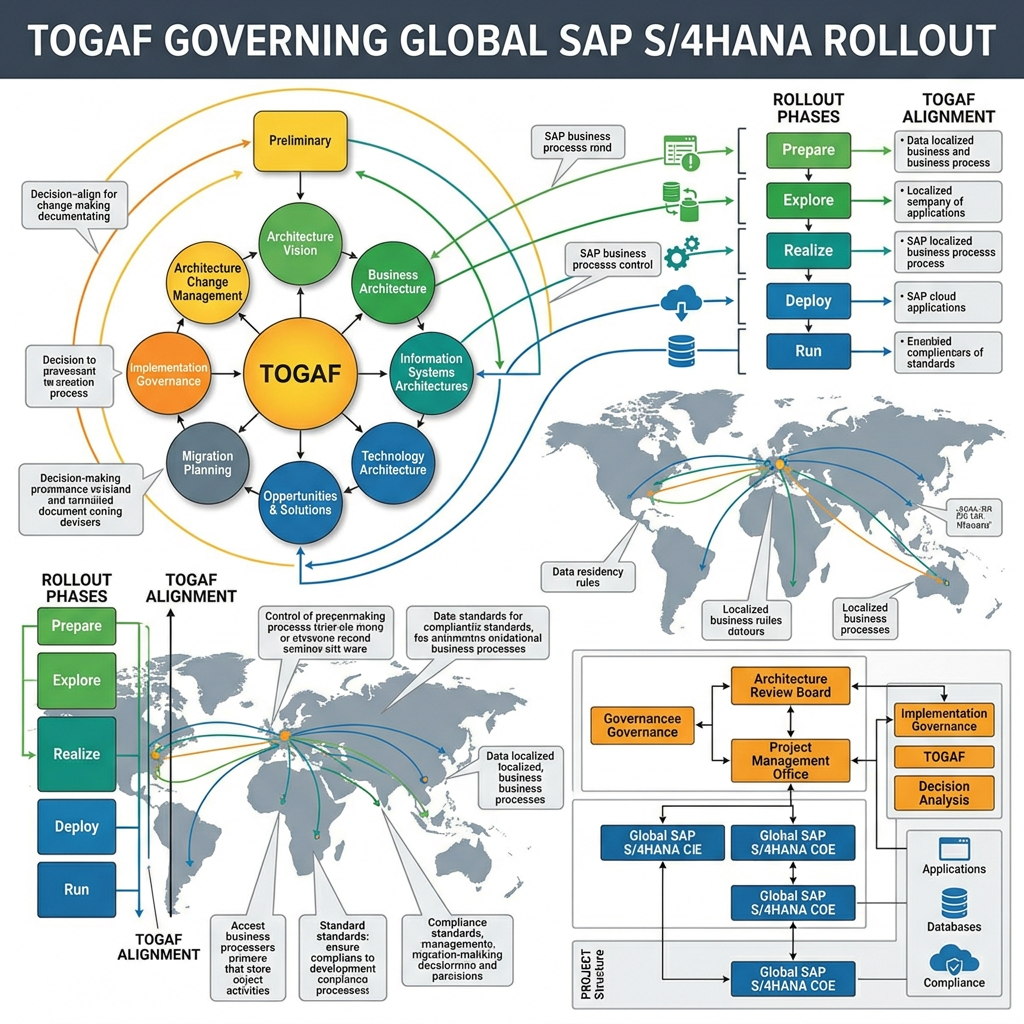
How TOGAF® Levels of Conformance Strengthen Governance for SAP Implementations and Global Rollouts
A practical guide to governing SAP S/4HANA global rollouts with TOGAF Levels of Conformance. Distinguish planned scope differences, value-creating extensions, and harmful deviations while embedding Architecture Compliance Reviews into SAP Activate. Continue reading
-
TOGAF® Phase G Implementation Governance in Practice: The PM and EA Roles in an Automotive Tier 1 SAP Rollout
A practical breakdown of TOGAF ADM Phase G for SAP S/4HANA programs — what PMs and EAs must govern, the artifacts Phase G produces, and how Clean Core and Fit-to-Standard reviews (SSB) map directly onto TOGAF’s Architecture Contract and compliance-review… Continue reading

-
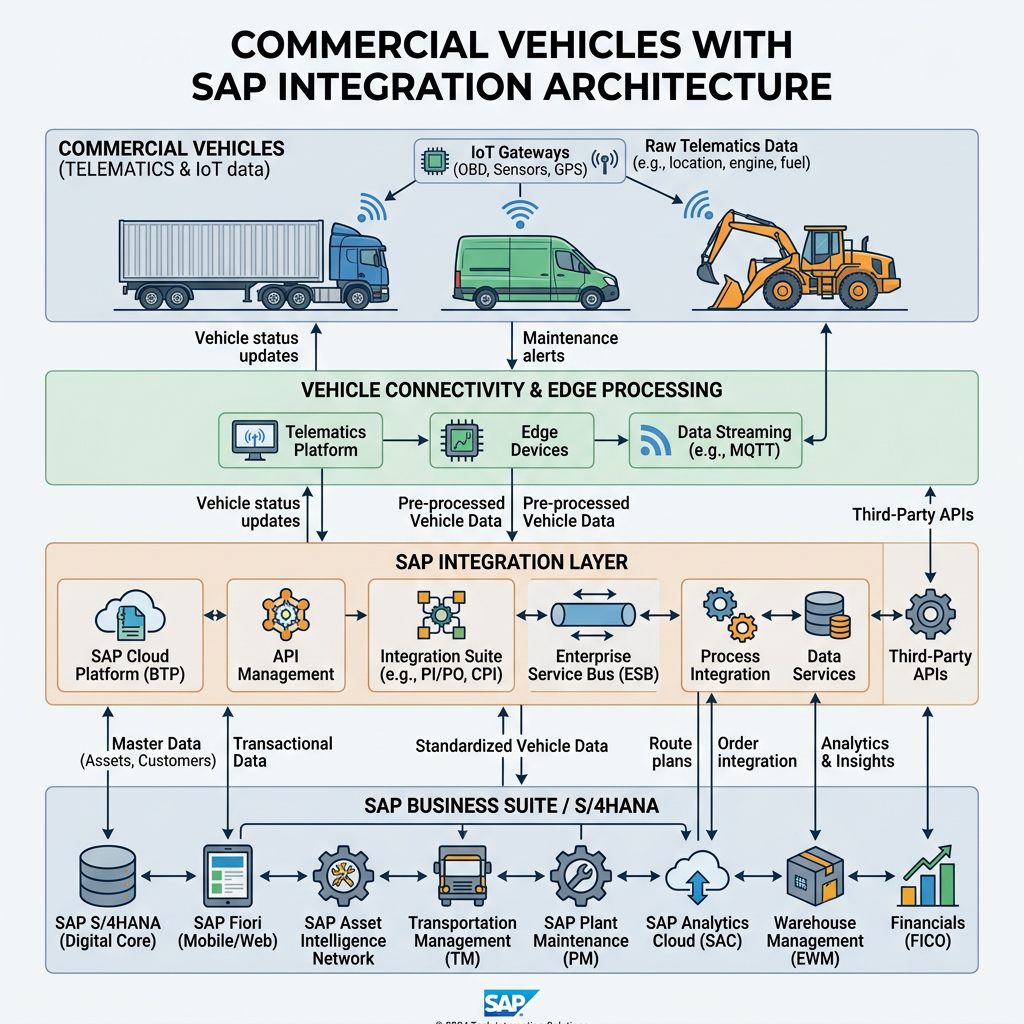
SAP S/4HANA as the Strategic Core for Maximizing Enterprise Integration Synergies in Commercial Vehicle OEMs
Using the planned Mitsubishi Fuso–Hino integration as a reference point, this article explains how commercial vehicle OEMs can architect SAP S/4HANA and related platforms to capture integration synergies and enable lifecycle‑based business models. Continue reading
-
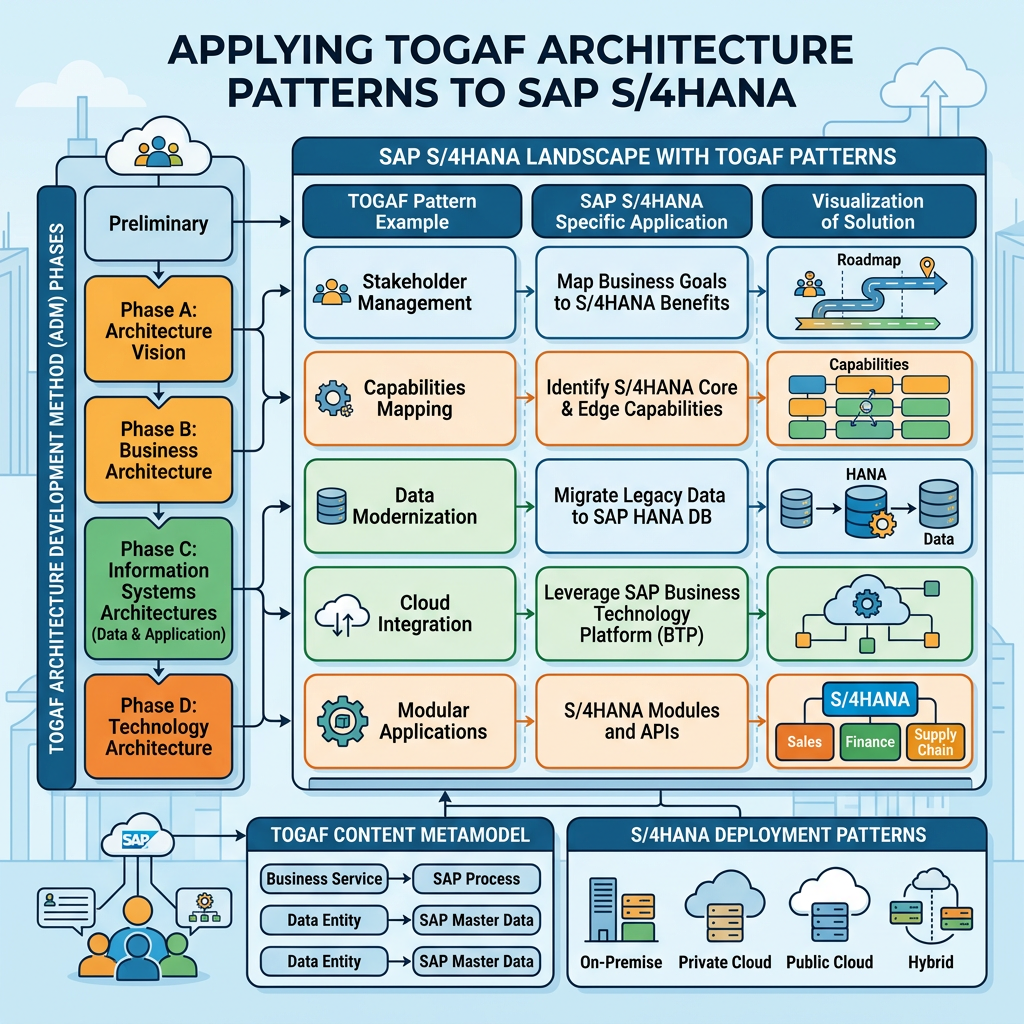
TOGAF® Architecture Patterns for SAP S/4HANA: Practical Guide for Enterprise Architects
This article explains how enterprise architects can use TOGAF architecture patterns as reusable assets in SAP S/4HANA programs. It covers key pattern structures, their role in SAP Activate phases, and examples such as global template, clean core, and central MDG… Continue reading
-
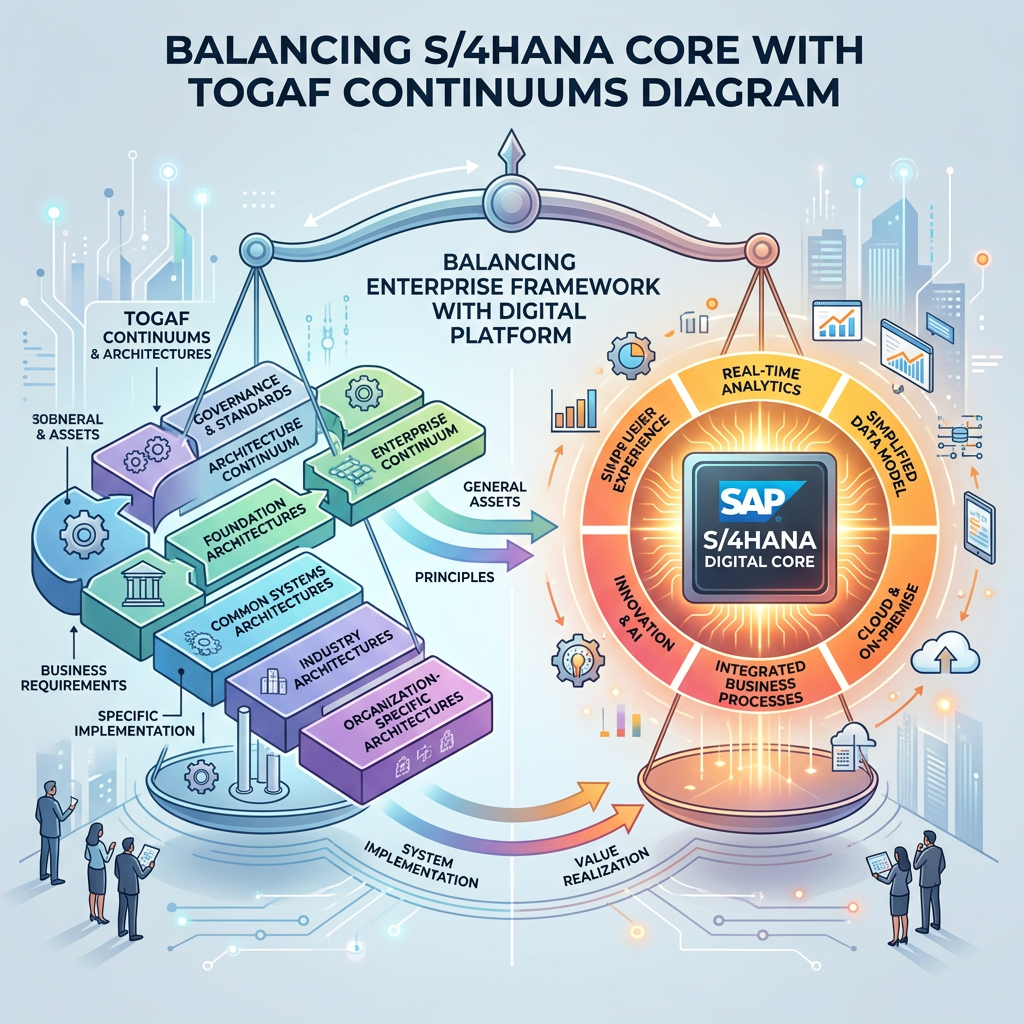
Balancing Clean Core and Business Requirements in SAP S/4HANA: Applying TOGAF’s Architecture Continuum and Solution Continuum
This article explains how enterprise architects can keep the SAP S/4HANA core clean while meeting real-world business requirements by applying TOGAF’s Architecture Continuum and Solution Continuum, and by managing S/4HANA templates and BTP extensions as reusable solution assets. Continue reading
-
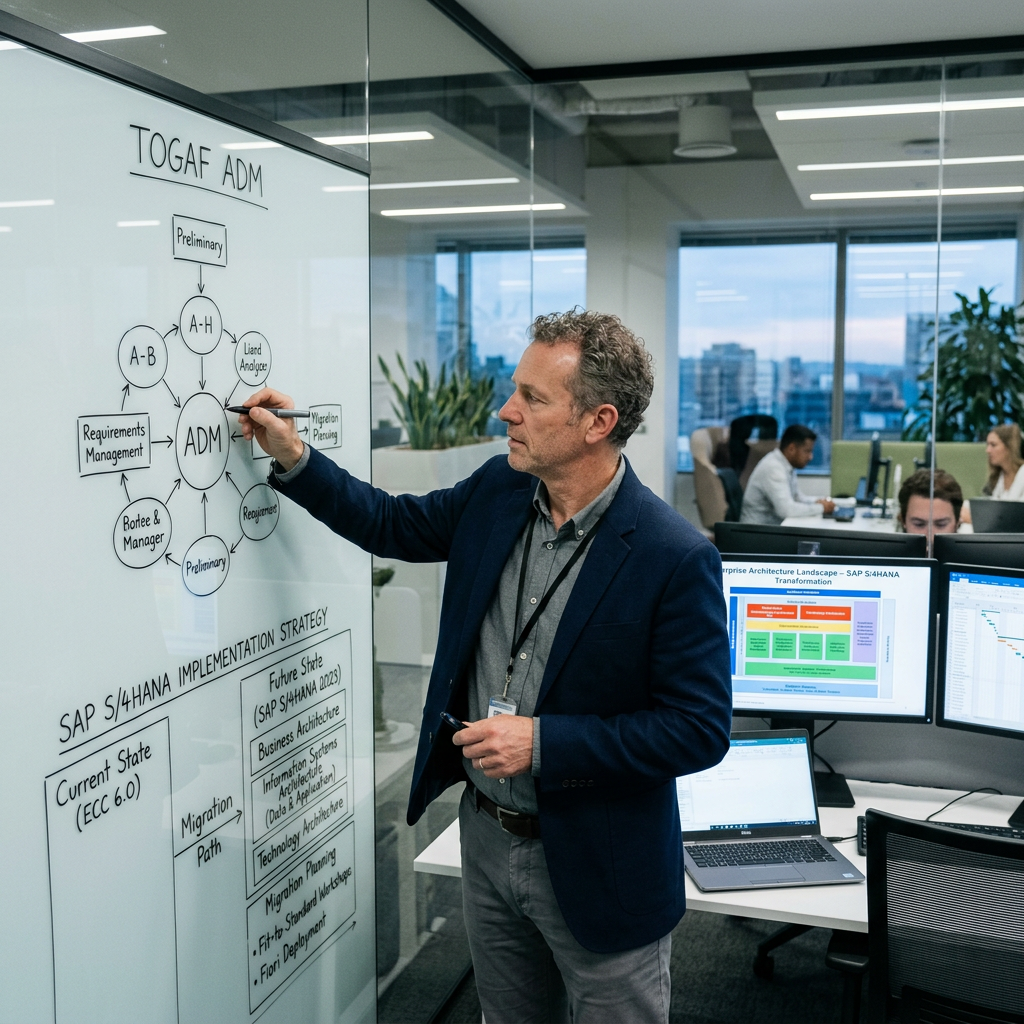
How to Apply TOGAF® Architecture Principles in SAP S/4HANA Cloud, Private Edition
This post explains how to turn slogans like “Fit‑to‑Standard” and “Clean Core” into actionable architecture principles for SAP S/4HANA Cloud, Private Edition. You will see where principles sit in TOGAF ADM, how to embed them into each phase, and what… Continue reading
-
Why SAP Architects Need an Architecture Repository
Many SAP programs produce excellent process diagrams and solution designs, yet lack a structured way to store, link, and reuse them across rollouts. This article translates the TOGAF Architecture Repository into a practical operating model for SAP architects, covering metamodel… Continue reading

-
SAP Program Managers Read This First: How to Balance a Global Template and a Clean Core Using TOGAF® Principles and DPBoK Contexts
In complex SAP S/4HANA and RISE with SAP programs, PMs must balance sprint delivery, clean core, and local requirements. This article explains how to use TOGAF principles and DPBoK contexts as a practical decision compass for scope, prioritization, and governance. Continue reading