Latest Posts
-
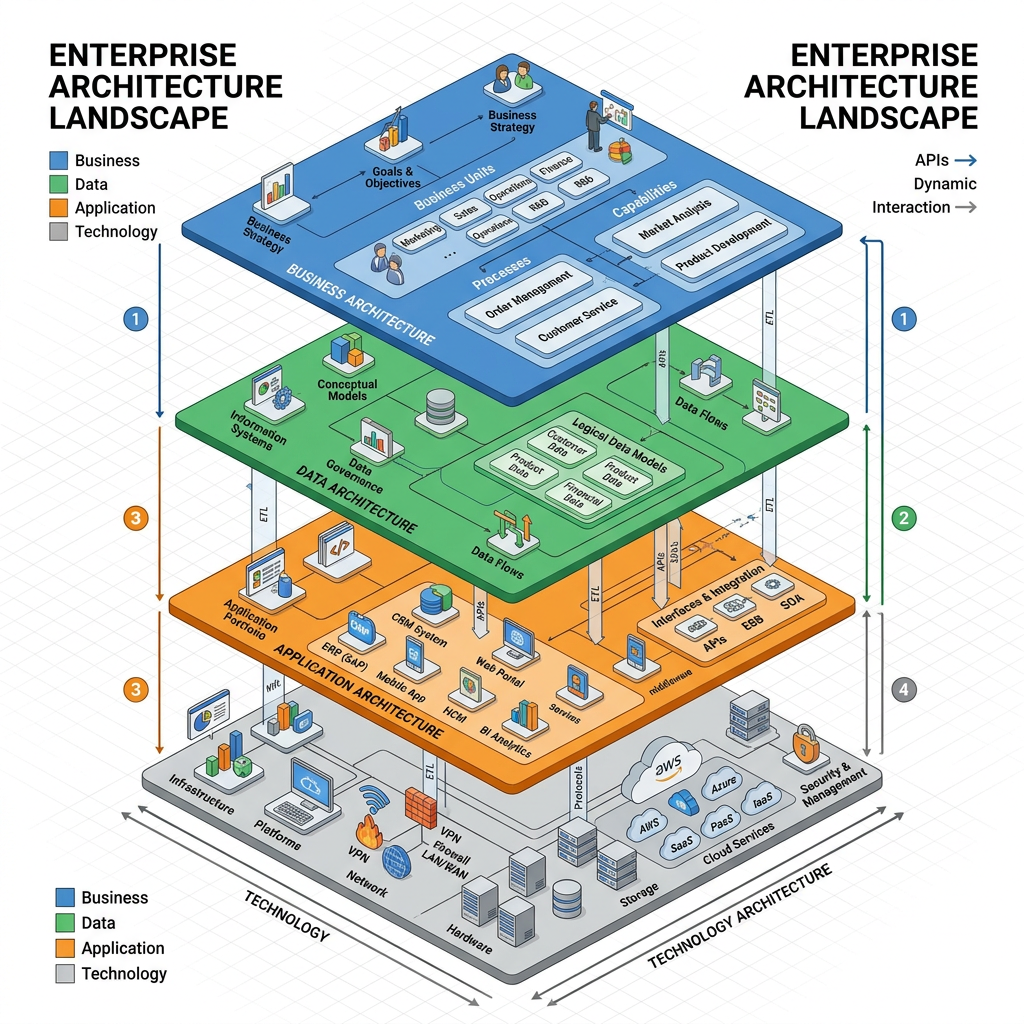
Why Use the TOGAF Content Framework in SAP Programs?
In large SAP implementations, architecture artifacts tend to explode: business requirements, process designs, application maps, interface diagrams, data models, infrastructure designs, and more.The TOGAF Content Framework gives you a consistent “shelf” to organize these artifacts and express them as instances… Continue reading
-
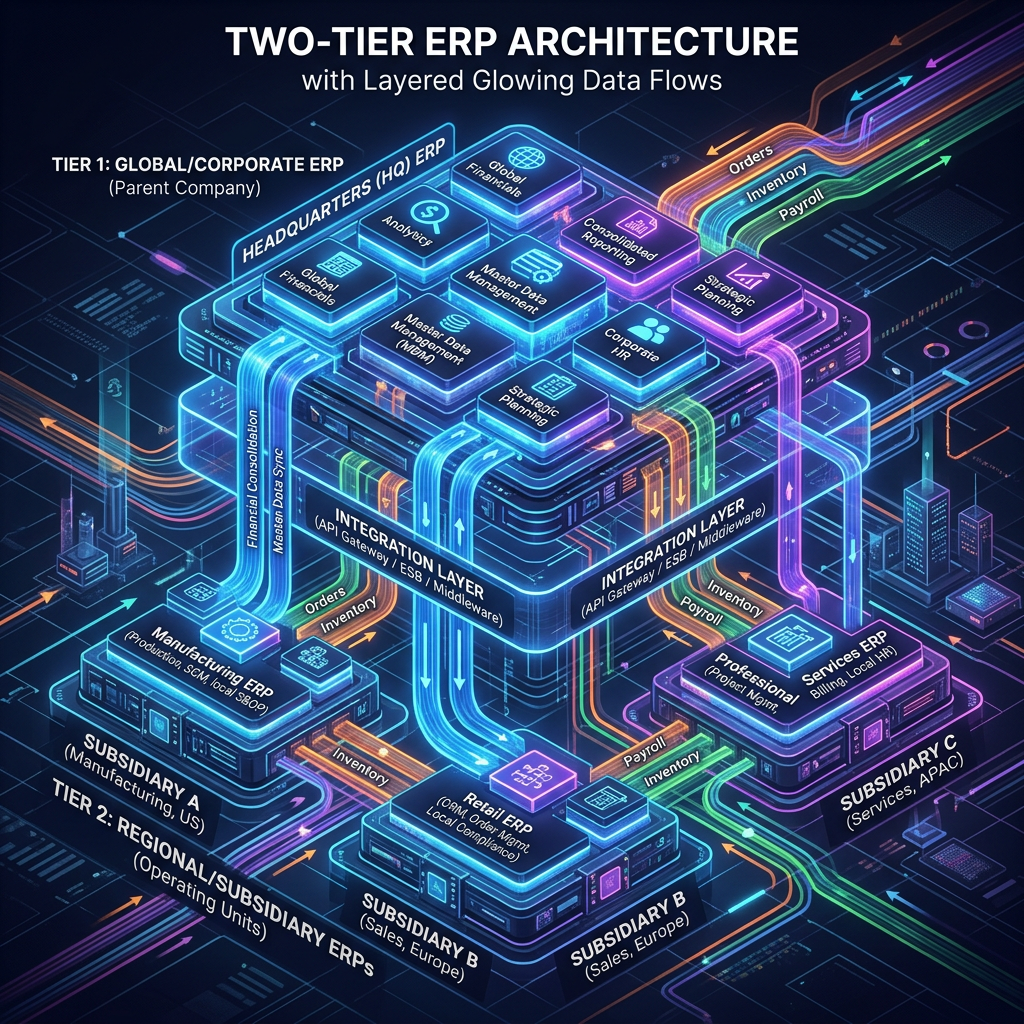
Accelerating Global Expansion and M&A Integration for Automotive Suppliers with Gartner’s Two‑Tier Model and SAP Two‑Tier ERP
For automotive suppliers, combining a headquarters S/4HANA core with cloud ERP for subsidiaries using Gartner’s Two‑Tier model and SAP Two‑Tier ERP is a highly practical strategy. This article explains three representative architecture patterns and a concrete SAP landscape from an… Continue reading
-
Why SAP Architects Need an Architecture Repository
Many SAP programs produce excellent process diagrams and solution designs, yet lack a structured way to store, link, and reuse them across rollouts. This article translates the TOGAF Architecture Repository into a practical operating model for SAP architects, covering metamodel… Continue reading

-
Must-Read for SAP S/4HANA PMs in Automotive Tier 1: A Practical Guide to Connecting Strategy and Execution with TOGAF’s Four Abstraction Levels
A practical guide for SAP S/4HANA PMs in automotive Tier 1 to align strategy and operations using TOGAF’s four abstraction levels. Continue reading

-
Why Tier-1 Automotive Suppliers Get Stuck in Cost Planning: 5 Structural Issues Behind “Quote-Dependent” Procurement
Tier‑1 automotive suppliers frequently find themselves unable to make decisions in cost planning until supplier quotes arrive, ending in last‑minute discount requests. Behind this pattern lie five structural issues: quote‑dependent cost planning, fragmented cost assumptions, price‑down‑only supplier relationships, weak linkage… Continue reading

-
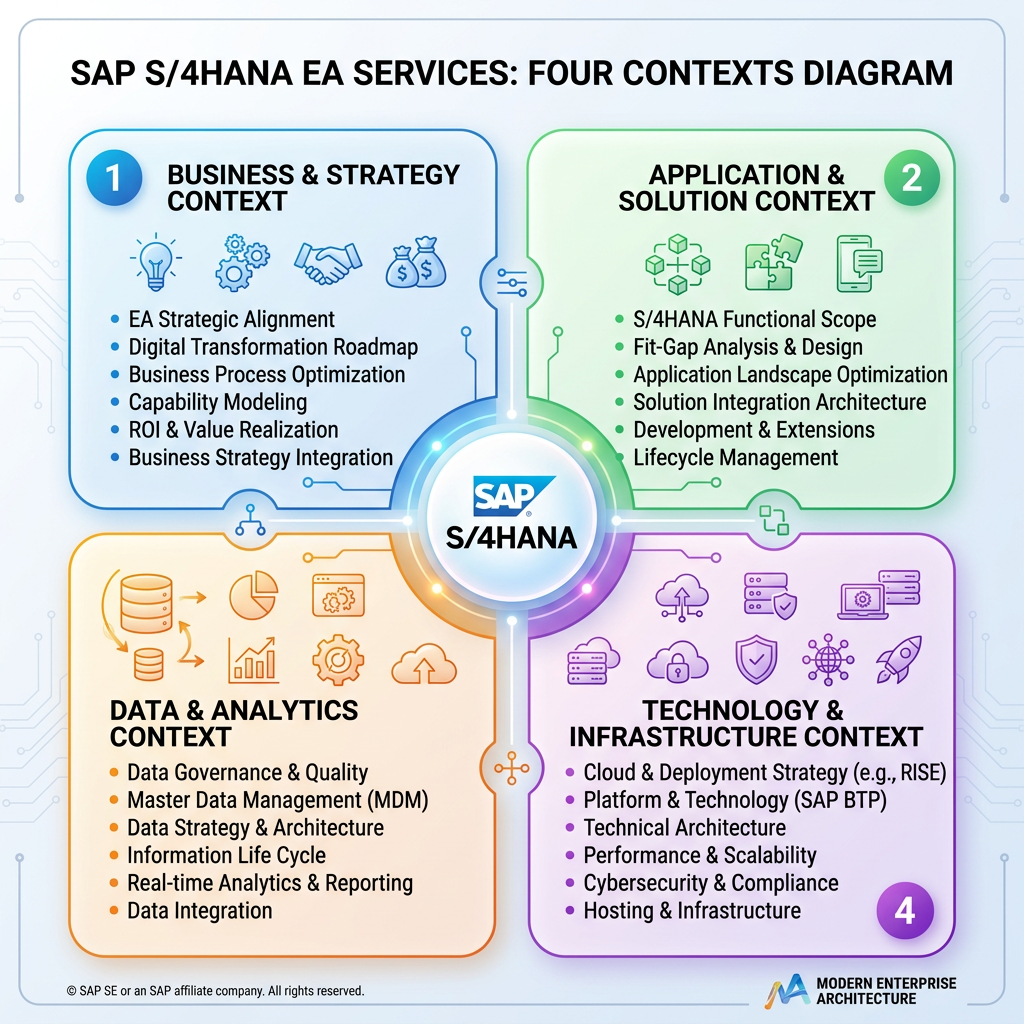
SAP Program Managers: A Practical Guide to Using TOGAF® and DPBoK EA Services to Make S/4HANA Projects Succeed
A hands‑on guide for SAP S/4HANA program managers who want to treat implementation as an EA service, not just a one‑time system upgrade. Using the four TOGAF / DPBoK contexts, it outlines practical EA services, deliverables, and PM tasks you… Continue reading
-
SAP Program Managers Read This First: How to Balance a Global Template and a Clean Core Using TOGAF® Principles and DPBoK Contexts
In complex SAP S/4HANA and RISE with SAP programs, PMs must balance sprint delivery, clean core, and local requirements. This article explains how to use TOGAF principles and DPBoK contexts as a practical decision compass for scope, prioritization, and governance. Continue reading
-
Is TOGAF Really “Too Heavy” for SAP Programs? Designing SAP Architecture with the Right EA Intensity Using DPBoK’s Four Contexts
This article reframes TOGAF as a scalable EA service for SAP programs, using DPBoK’s four contexts to adjust architecture intensity from PoC and single template teams to global rollouts and long‑term digital portfolios. Continue reading

-
Why SAP Programs Need TOGAF® from a PM Perspective
A global SAP template will not remain sustainable by agile delivery alone. This article explains how SAP program managers can apply TOGAF to control technical debt and complexity while driving RISE with SAP and S/4HANA transformations. Continue reading

-
How to Design the MRP4 View in SAP S/4HANA Private Edition for Manufacturing and MRP by Location
The MRP4 view in SAP S/4HANA Private Edition is the fine‑tuning dial for manufacturing logic and MRP by location. This article explains the key fields and how to design them for real‑world automotive and discrete manufacturing. Continue reading
