IT governance
-
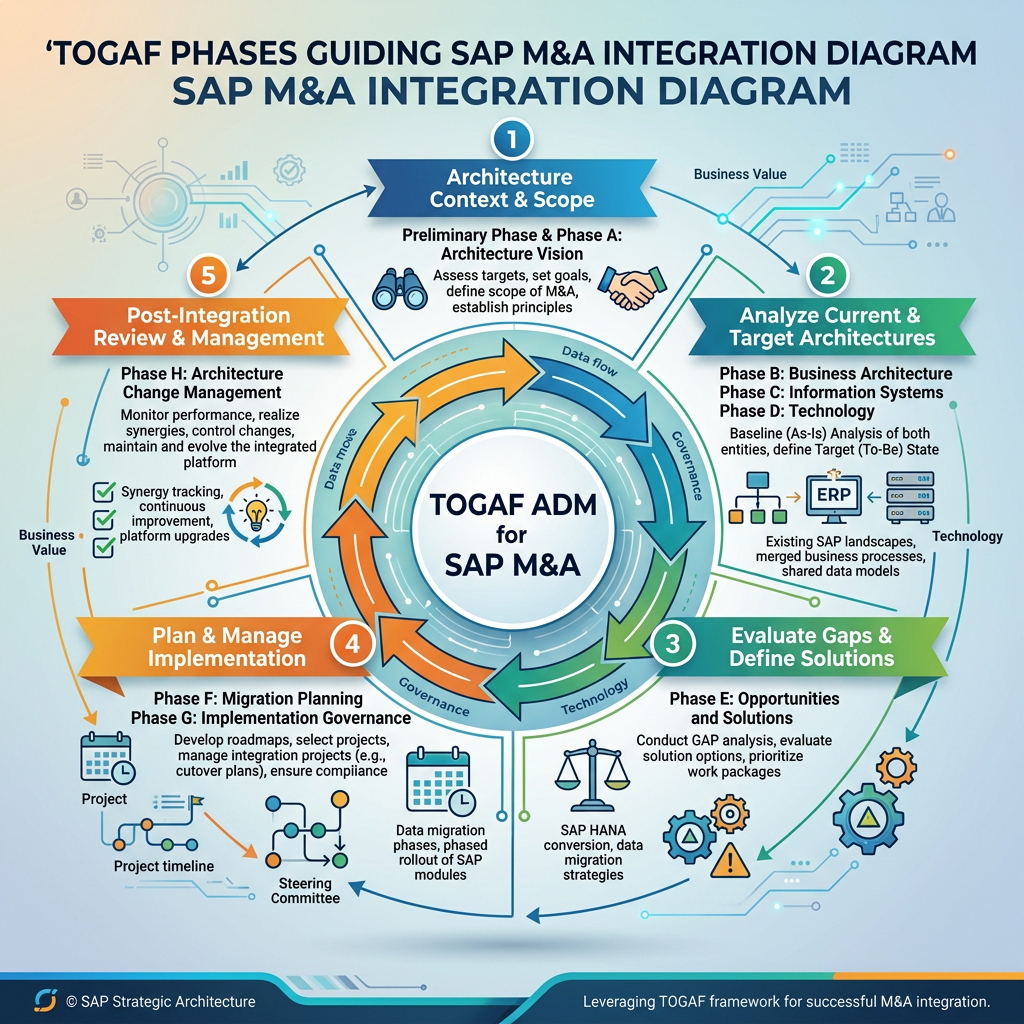
TOGAF® Preliminary Phase and Phase A: A Practical Guide to SAP Integration in Post‑Merger Scenarios
This article explains how Enterprise Architects can use TOGAF Preliminary Phase and Phase A to lead SAP integration in post-merger scenarios, establishing principles, governance, and a clear Architecture Vision. Continue reading
-
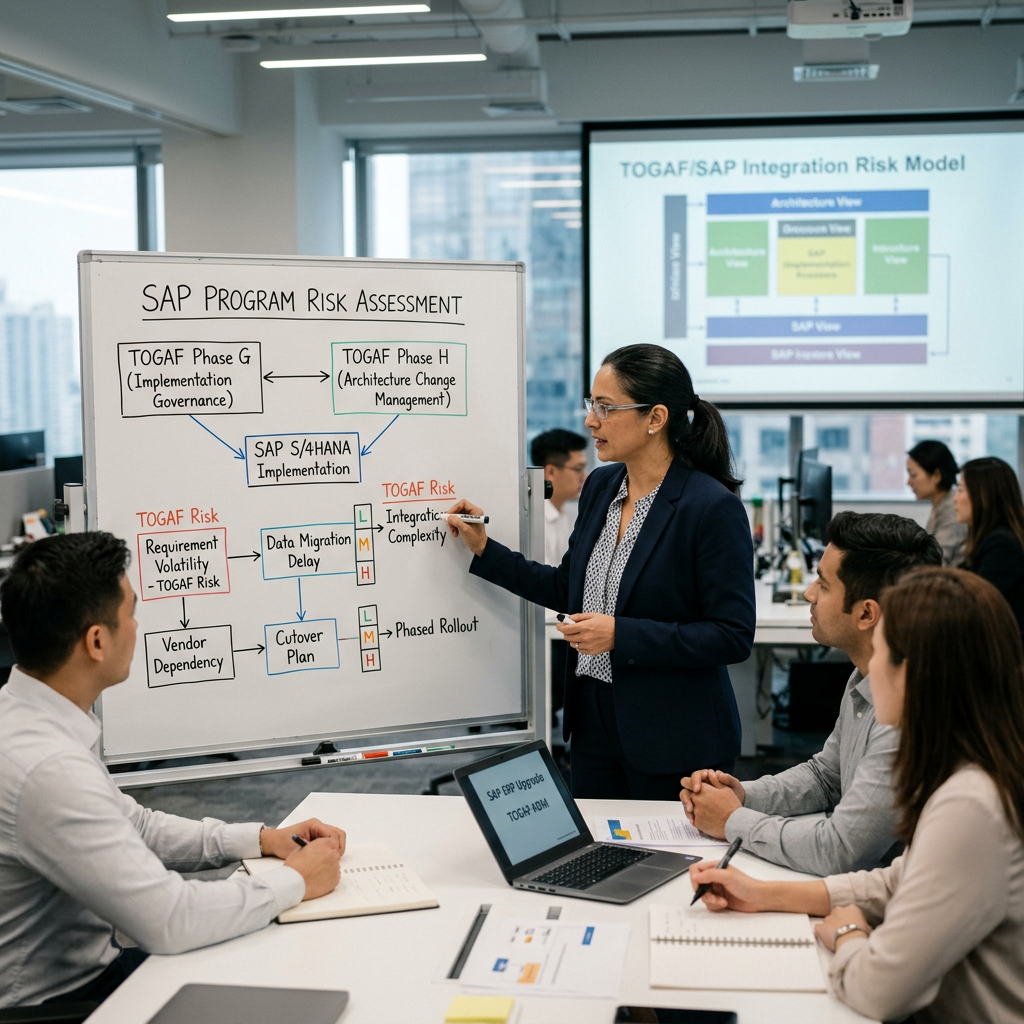
TOGAF® Risk Management in SAP S/4HANA Implementations: A Practical Guide for Enterprise Architects
TOGAF Risk Management is not just about reading the PMO risk register. It is how Enterprise Architects connect architectural decisions with implementation governance in SAP S/4HANA programs. This article explains how to structure risks around Fit‑to‑Standard deviations, data migration, integration… Continue reading
-
How TOGAF® Stakeholder Management Technique Drives Successful SAP S/4HANA Implementations for Enterprise Architects
In SAP S/4HANA programs, success depends not only on technology and process design but also on how stakeholders are managed. This post shows how Enterprise Architects can apply the TOGAF Stakeholder Management Technique to design stakeholder expectations and engagement for… Continue reading

-
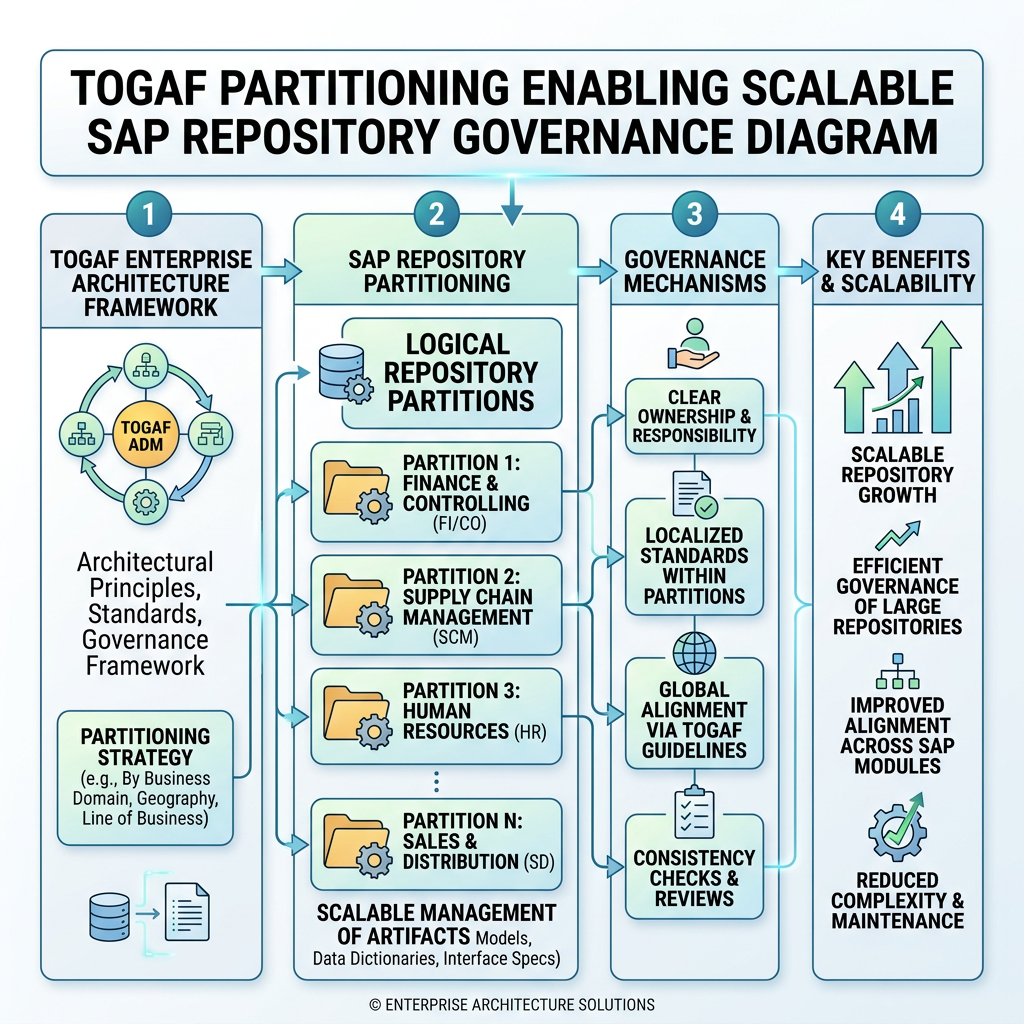
TOGAF® Architecture Partitioning for SAP Implementation: Designing an Enterprise Architecture Repository for Reuse, Governance, and Change Management
A practical guide to applying TOGAF architecture partitioning in SAP implementations, focusing on repository design, governance, and scalability. Continue reading
-
SAP Architecture Change Management: Applying TOGAF® ADM Phase H After Go‑Live
SAP go‑live is not the finish line but the start of a new enterprise architecture cycle. This article explains how to apply TOGAF ADM Phase H (Architecture Change Management) to SAP implementations and operations, so that your SAP landscape keeps… Continue reading

-
A Must‑Read for Digital Transformation Practitioners: What Is DPBoK and How Does It Differ from TOGAF® Enterprise Architecture?
The Digital Practitioner Body of Knowledge (DPBoK) is a practical standard for planning, building, operating, and scaling digital products. This article outlines its scale‑based model and capability coverage, explains how it complements TOGAF Enterprise Architecture, and highlights how digital transformation… Continue reading

-
SAP Fundamentals Series #2 – Why the SAP Customer Number Matters
A practical overview of the SAP Customer Number: what it is, how it drives licensing and support, how groups should structure it, and key risks and benefits of Customer Number consolidation. Continue reading
