REI
-
TOGAF® Agile × Product Management: Shifting Manufacturing from Projects to Continuous Value Creation
Why should manufacturing companies shift from one-time system projects to continuously evolving products? This article explains TOGAF Agile Product Management in practical terms, using target costing as a concrete example. Continue reading

-
TOGAF® Agile Architecture in Practice: Understanding Landscape and the Three-Layer Model (Strategy, Segment, Capability)
A practical guide to TOGAF Agile Architecture using the three-layer model. Learn how to connect strategy, business domains, and capabilities directly to Agile execution. Continue reading

-
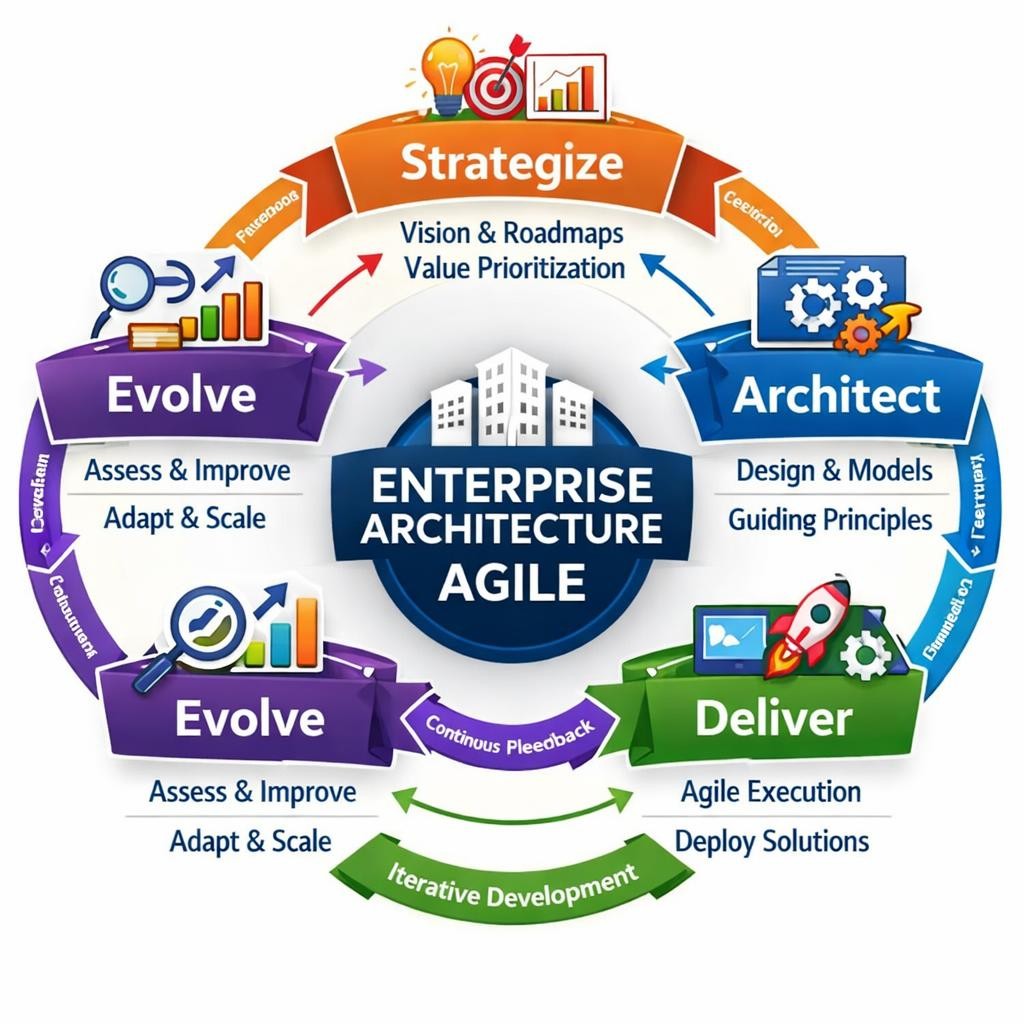
Developing Architecture in an Agile Way with TOGAF®: Practical Application and Key Insights
A practical guide to applying TOGAF’s “Developing Architecture in an Agile Way.” Learn how enterprises can balance speed and governance through architecture backlogs, iterative ADM application, and lightweight governance models. Continue reading
-
TOGAF® ADM in Action: Practical Guide to Applying Enterprise Architecture Methodology in Real Projects
A professional guide to leveraging TOGAF ADM for real-world EA transformation—from vision setting to governance. Continue reading

-
Enterprise Architecture in Action: How Nissan Motor Co. Achieved Global Transparency and Standardization in Record Time
Nissan’s EA implementation reveals how global manufacturers can unify IT and business operations. Learn key success factors behind their rapid transformation. Continue reading

-
What Is Enterprise Architecture (EA)? A TOGAF‑Based Primer for Connecting Strategy and IT
This article introduces Enterprise Architecture (EA) and TOGAF as practical tools for connecting business strategy and IT. It covers the four architecture domains, the TOGAF ADM cycle, enterprise agility, and the role of SAP and LeanIX, and explains why EA… Continue reading

-
Strategic Sourcing for Automotive Parts Manufacturers: Winning Beyond Cost Through Resilience, Speed, and Supplier Co-Creation
Cost alone is no longer enough. Learn the four principles that enable “winning” strategic sourcing for automotive manufacturers—resilience, speed, and supplier partnership. Continue reading
-
Challenges in Automotive Parts Sourcing—and Why Firefighting Never Ends
Why is sourcing in the automotive parts industry so hard? Explore four structural reasons that make Tier‑1 sourcing complex and why escaping the firefighting trap requires redefining procurement as a strategic capability. Continue reading
-
What Does Strategic Sourcing for Automotive Suppliers?
Automotive suppliers are facing semiconductor shortages, geopolitical risk, and the EV shift. This article explains why strategic sourcing has become a board‑level topic and introduces three core pillars: risk management, supplier collaboration, and cost engineering. Continue reading

-
SAP fundamentals Series #4: How to Leverage SAP Cloud Identity Services for Secure, Centralized IAM
A practical introduction to SAP Cloud Identity Services covering IAS, IPS and Identity Directory, key business benefits, common SAP cloud use cases, and architecture and governance considerations for enterprise IAM. Continue reading